Cupping Therapy for Navel Displacement: Can It Help?
Many people experience unexplained abdominal discomfort, bloating, digestive disturbances, or a sensation that their body feels “out of balance.” In traditional healing systems, these symptoms are sometimes associated with navel displacement, also known as Nabhi Displacement.
Although modern medicine does not officially recognize navel displacement as a medical diagnosis, many individuals seek complementary therapies to address these symptoms. One such approach is cupping therapy, which aims to reduce muscle tension, improve circulation, and promote relaxation.
In this article, we’ll explore what cupping therapy is, how it may support people experiencing symptoms commonly linked with navel displacement, and when it’s important to consult a qualified healthcare professional.
What Is Navel Displacement?
Navel displacement is a term commonly used in traditional healing practices. It refers to the belief that the body’s center around the navel has shifted due to factors such as:
- Heavy lifting
- Sudden twisting movements
- Falls or injuries
- Excessive physical strain
- Pregnancy and childbirth
- Repetitive bending
- Weak abdominal muscles
People who believe they have navel displacement often report symptoms such as:
- Abdominal discomfort
- Constipation
- Bloating
- Poor digestion
- Low back pain
- Feeling of abdominal heaviness
- Difficulty performing daily activities comfortably
Because these symptoms can also be caused by many recognized medical conditions, proper evaluation by a healthcare professional is always recommended.
What Is Cupping Therapy?
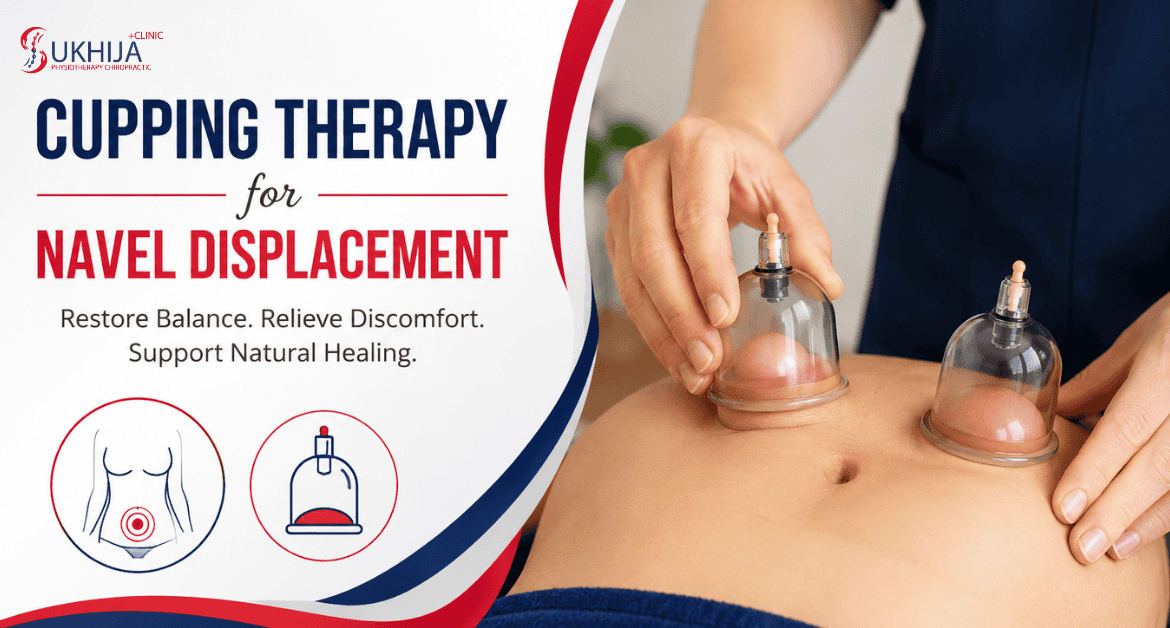
Cupping therapy is an ancient therapeutic technique that uses specially designed cups to create gentle suction on the skin.
The negative pressure created by the cups may help:
- Increase local blood circulation
- Reduce muscle tightness
- Promote relaxation
- Improve soft tissue mobility
- Support the body’s natural recovery process
At physiotherapy clinics, cupping is often combined with exercise therapy, posture correction, manual therapy, and lifestyle guidance for a more comprehensive treatment approach.
Can Cupping Therapy Help with Navel Displacement?
For individuals experiencing symptoms commonly associated with navel displacement, cupping therapy may help by addressing muscular tightness and movement restrictions around the abdomen, lower back, and pelvis.
Potential benefits may include:
Improved Muscle Relaxation
Tight abdominal and lower back muscles can contribute to discomfort. Cupping therapy may help release soft tissue tension.
Better Blood Circulation
The suction created during treatment may temporarily increase circulation in the treated area, supporting tissue health.
Reduced Abdominal Tightness
Many patients report feeling lighter and more comfortable after treatment when muscle tension is reduced.
Support for Digestive Comfort
When combined with breathing exercises, movement therapy, hydration, and healthy lifestyle habits, physiotherapy may contribute to improved digestive function in some individuals.
How Is Cupping Therapy Performed?
A typical session may include:
Initial Assessment
Your physiotherapist evaluates your symptoms, posture, movement patterns, abdominal muscles, and medical history.
Cup Placement
Special cups are placed on selected areas around the abdomen, lower back, or surrounding muscles depending on the assessment findings.
Gentle Suction
Controlled suction is applied for several minutes to create negative pressure.
Complementary Physiotherapy
Treatment may also include:
- Core strengthening
- Stretching exercises
- Manual therapy
- Breathing techniques
- Postural correction
- Lifestyle advice
Who May Benefit?
People experiencing symptoms such as:
- Abdominal muscle tightness
- Mild digestive discomfort
- Constipation
- Lower back tightness
- Reduced core flexibility
- General muscular stiffness
When Should You See a Doctor?
Seek immediate medical evaluation if abdominal pain is:
- Severe or worsening
- Associated with fever
- Accompanied by persistent vomiting
- Linked with unexplained weight loss
- Associated with blood in the stool
- Following significant trauma
These symptoms may indicate a medical condition requiring urgent care.
Tips to Support Abdominal Health
Along with professional physiotherapy, consider:
- Stay physically active
- Strengthen your core muscles
- Maintain good posture
- Drink adequate water
- Eat a fibre-rich diet
- Avoid lifting heavy objects incorrectly
- Practice regular stretching
- Manage stress effectively
Frequently Asked Questions
Is cupping therapy effective for navel displacement?
Some individuals report relief from symptoms commonly associated with navel displacement after cupping therapy. While scientific evidence specifically supporting “navel displacement” is limited, cupping may help reduce muscle tension and improve comfort as part of a broader physiotherapy program.
Is cupping therapy painful?
Most people experience only mild suction and temporary pressure. Some circular marks may appear after treatment and typically fade within several days.
How many sessions are needed?
The number of sessions depends on your symptoms, physical condition, and treatment goals. Your physiotherapist will recommend a personalized plan after assessment.
Can cupping therapy be combined with physiotherapy?
Yes. Combining cupping therapy with exercise therapy, manual therapy, posture correction, and rehabilitation often provides a more comprehensive approach than relying on a single treatment.
Why Choose Sukhija Physiotherapy Clinic?
At Sukhija Physiotherapy Clinic, every treatment begins with a thorough assessment to understand the root cause of your symptoms. Our team integrates evidence-informed physiotherapy with complementary techniques such as cupping therapy and manual therapy when clinically appropriate.
Our focus is not just on symptom relief but on improving movement, restoring function, and helping patients return to their daily activities with confidence.
Final Thoughts
Cupping therapy for navel displacement is a topic that continues to attract interest among people seeking natural and holistic approaches to abdominal discomfort. While the concept of navel displacement is rooted in traditional healing systems rather than modern medical diagnosis, cupping therapy may help reduce muscle tension, promote relaxation, and complement a personalized physiotherapy program.
If you’re experiencing persistent abdominal pain, digestive symptoms, or discomfort, it’s important to seek a professional assessment to identify the underlying cause and receive the most appropriate treatment.