Heart failure affects millions of people worldwide and is one of the leading causes of reduced mobility, fatigue, and hospital admissions among older adults. Despite its name, heart failure does not mean the heart has stopped working. Instead, it means the heart is unable to pump blood efficiently enough to meet the body’s needs. As a result, individuals often experience breathlessness, low energy levels, swelling in the legs, and difficulty performing everyday activities.
Many patients assume they should avoid physical activity after being diagnosed with heart failure. However, modern research shows that appropriately supervised exercise and rehabilitation can significantly improve physical function, exercise tolerance, and quality of life. This is where physical therapy for heart failure and cardiorespiratory physiotherapy play a vital role. Structured cardiac rehabilitation programs help patients regain confidence, improve endurance, and manage symptoms more effectively.
Research from the American Heart Association highlights that structured cardiac rehabilitation programs can help improve quality of life, physical function, and long-term heart health in people living with heart failure.
What Is Heart Failure?
Heart failure is a chronic condition in which the heart cannot pump enough blood to supply oxygen and nutrients throughout the body efficiently. It may develop due to:
- Coronary artery disease
- Previous heart attack
- High blood pressure
- Heart valve disorders
- Cardiomyopathy
- Congenital heart conditions
Common symptoms include:
- Shortness of breath during activity or rest
- Persistent fatigue
- Swelling in the feet, ankles, or legs
- Difficulty climbing stairs
- Reduced exercise tolerance
- Rapid heartbeat
- Frequent coughing or wheezing
These symptoms often cause people to become less active, which can further weaken muscles and reduce cardiovascular fitness.
What Is Physical Therapy for Heart Failure?
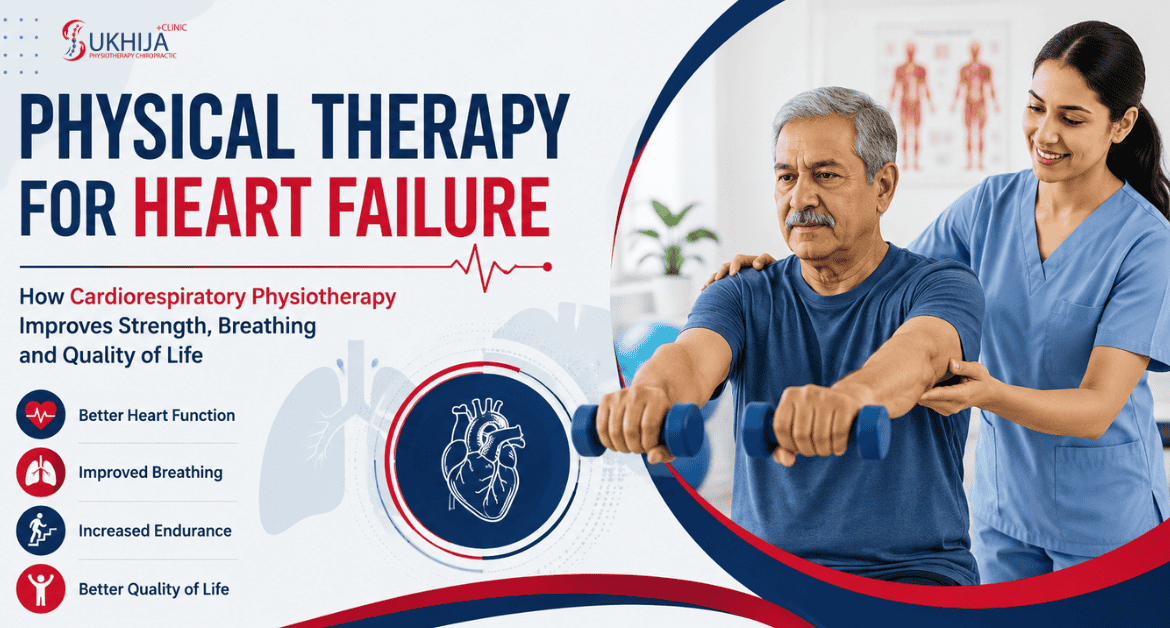
Physical therapy for heart failure is a specialized rehabilitation approach that helps individuals improve physical function while safely managing their cardiac condition.
The primary goals include:
- Improving cardiovascular endurance
- Increasing exercise tolerance
- Reducing breathlessness
- Enhancing muscle strength
- Supporting independent daily activities
- Improving overall quality of life
Cardiac rehabilitation programs typically include supervised exercise training, education, lifestyle guidance, and symptom monitoring to help patients manage heart failure more effectively.
What Is Cardiorespiratory Physiotherapy?
Cardiorespiratory physiotherapy is a specialized area of physiotherapy focused on conditions affecting the heart and lungs.
It helps patients improve breathing efficiency, circulation, endurance, and physical performance through evidence-based rehabilitation techniques.
This type of physiotherapy may benefit people with:
- Heart failure
- Coronary artery disease
- Chronic obstructive pulmonary disease (COPD)
- Asthma
- Pulmonary fibrosis
- Post-cardiac surgery recovery
- Post-COVID respiratory complications
The aim is to optimize how the heart and lungs work together so the body can use oxygen more effectively during everyday activities.
How Cardiorespiratory Physiotherapy Helps Heart Failure Patients
1. Improves Exercise Tolerance
One of the biggest challenges for individuals with heart failure is reduced stamina.
A physiotherapist develops a gradual exercise program based on the patient’s condition and fitness level. Over time, patients often notice improvements in walking distance, stair climbing, and daily activities.
Studies have shown that exercise-based cardiac rehabilitation improves functional capacity and quality of life in people living with heart failure.
2. Reduces Breathlessness
Breathlessness can make even simple activities feel exhausting.
Cardiorespiratory physiotherapy includes breathing retraining techniques and controlled physical activity that help patients improve oxygen utilization and reduce respiratory discomfort during movement.
3. Builds Muscle Strength
Heart failure often leads to muscle weakness because of prolonged inactivity.
Strengthening exercises improve:
- Lower limb strength
- Balance
- Stability
- Mobility
- Independence
Stronger muscles also reduce the workload placed on the cardiovascular system during daily activities.
4. Supports Better Circulation
Regular movement encourages healthy blood flow throughout the body.
Improved circulation helps:
- Deliver oxygen more efficiently
- Reduce fatigue
- Support cardiovascular health
- Enhance physical performance
5. Restores Confidence
Many heart failure patients become fearful of exercise after diagnosis.
Supervised physiotherapy provides a safe environment where patients can gradually regain confidence and return to activities they enjoy. Many participants in cardiac rehabilitation programs report feeling stronger, more independent, and more comfortable being physically active again.
What Does a Cardiorespiratory Physiotherapy Program Include?
A personalized rehabilitation plan may include:
Initial Assessment
Your physiotherapist may evaluate:
- Heart rate
- Blood pressure
- Oxygen saturation
- Breathing patterns
- Mobility levels
- Exercise tolerance
Aerobic Conditioning
Examples include:
- Walking programs
- Stationary cycling
- Treadmill training
- Low-impact cardiovascular exercises
Strength Training
Targeted exercises help improve:
- Muscle strength
- Endurance
- Balance
- Functional movement
Breathing Exercises
Breathing techniques help:
- Improve lung expansion
- Enhance respiratory efficiency
- Reduce breathlessness
Lifestyle Education
Patients learn about:
- Safe exercise progression
- Energy conservation
- Symptom monitoring
- Heart-healthy lifestyle habits
These components are commonly included in modern cardiac rehabilitation programs.
When Should You Consult a Physiotherapist?
You should consider professional evaluation if you experience:
- Persistent fatigue
- Breathlessness during routine activities
- Reduced exercise capacity
- Swelling in the legs or ankles
- Difficulty performing daily tasks
- Recovery challenges after cardiac surgery
If you are looking for guidance from an experienced physiotherapist in Chandigarh, early rehabilitation can help improve physical function, reduce symptoms, and support long-term heart health.
Similarly, choosing a specialized physiotherapy center in Chandigarh that offers cardiorespiratory rehabilitation can ensure that treatment is personalized, monitored, and aligned with your medical condition.
Frequently Asked Questions
Is exercise safe for people with heart failure?
Yes. When prescribed and supervised appropriately, exercise is considered a key component of heart failure management and rehabilitation.
The Mayo Clinic notes that cardiac rehabilitation programs are personalized and supervised to ensure exercises are performed safely based on an individual’s condition.
Can physical therapy cure heart failure?
No. Physical therapy cannot cure heart failure, but it can help reduce symptoms, improve endurance, increase independence, and enhance overall quality of life.
How often should heart failure patients exercise?
The frequency and intensity of exercise should be determined by a healthcare professional based on the patient’s medical condition, symptoms, and rehabilitation goals.
What is the difference between cardiac rehabilitation and cardiorespiratory physiotherapy?
Cardiac rehabilitation is a comprehensive program that includes exercise training, education, and lifestyle support. Cardiorespiratory physiotherapy is a specialized physiotherapy discipline that forms an important part of rehabilitation for heart and lung conditions.