
Have you ever leaked urine while laughing, sneezing, or exercising? Do you feel heaviness in your pelvis after standing for long periods? Have you been experiencing lower back pain, constipation, or discomfort during intimacy without knowing the cause?
Many women assume these symptoms are a normal part of pregnancy, childbirth, menopause, or ageing. In reality, they may be signs of pelvic floor dysfunction—a common but treatable condition that affects women of all ages.
The pelvic floor plays a vital role in bladder control, bowel function, core stability, pregnancy, childbirth, and sexual health. When these muscles become weak, overly tight, or lose coordination, everyday activities can become uncomfortable and affect your confidence and quality of life. The encouraging news is that pelvic floor dysfunction often responds well to physiotherapy. With the right assessment and a personalised rehabilitation plan, many women experience significant improvement without surgery.
In this guide, you’ll learn:
- What pelvic floor dysfunction is
- The most common warning signs
- Why these symptoms develop
- When you should seek professional help
- How pelvic floor physiotherapy can support recovery
Quick Answer: What Are the Symptoms of Pelvic Floor Dysfunction?
Pelvic floor dysfunction can cause a variety of symptoms depending on whether the muscles are weak, tight, or not working in coordination.
Common symptoms include:
- Urine leakage when coughing, sneezing, laughing, or exercising
- Frequent or urgent need to urinate
- Difficulty emptying the bladder completely
- Chronic constipation or straining during bowel movements
- Pelvic pain or pressure
- Pain during sexual intercourse
- Lower back, hip, or tailbone pain
- A feeling of heaviness or bulging in the pelvic area
- Difficulty controlling gas or stool
- Weak core muscles and reduced stability
If these symptoms continue for several weeks or begin affecting your daily routine, they should be assessed by a qualified women’s health physiotherapist.
Understanding the Pelvic Floor: Why These Muscles Matter
The pelvic floor is a group of muscles, ligaments, and connective tissues that form a supportive sling at the base of your pelvis.
These muscles help:
- Support the bladder, uterus, and bowel
- Control urination and bowel movements
- Maintain continence
- Support the growing baby during pregnancy
- Assist during childbirth
- Improve sexual function
- Work with your diaphragm and abdominal muscles to stabilise your core
Think of your pelvic floor as the foundation of your body’s core. When this foundation is functioning well, it quietly supports many everyday activities. When it isn’t, symptoms can appear gradually and may worsen if left untreated.
What Is Pelvic Floor Dysfunction?
Pelvic floor dysfunction occurs when the pelvic floor muscles are unable to relax, contract, or coordinate effectively.
Many people believe pelvic floor problems only happen because the muscles are weak. In reality, pelvic floor dysfunction can occur when the muscles are:
- Too weak
- Too tight
- Overactive
- Poorly coordinated
- Injured during pregnancy or childbirth
- Affected by surgery or chronic pain
This is why doing pelvic floor exercises without an assessment is not always the right approach. For some women, strengthening exercises may help, while others first need techniques to relax tight muscles and restore normal movement.
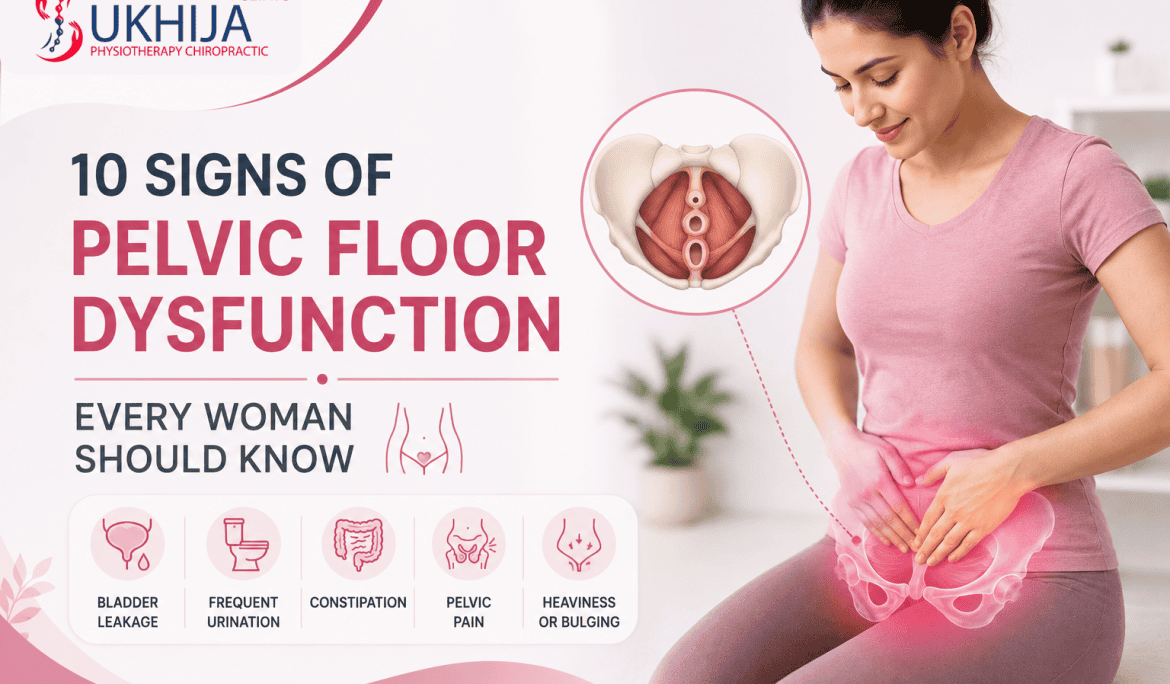
10 Symptoms of Pelvic Floor Dysfunction Every Woman Should Know
1. Urine Leakage During Everyday Activities
One of the earliest and most common signs is leaking urine while:
- Sneezing
- Coughing
- Laughing
- Running
- Jumping
- Lifting groceries
- Exercising
Many women silently accept bladder leakage after pregnancy or with age, believing it is something they must live with. However, urine leakage is a symptom—not a normal part of life.
Even occasional leakage deserves attention because early treatment often leads to better outcomes.
Why It Happens
The pelvic floor muscles help close the urethra and support the bladder. If these muscles cannot respond effectively when pressure inside the abdomen increases, urine may leak.
2. Needing to Visit the Toilet More Frequently
Do you find yourself planning every outing around the nearest washroom?
Frequent urination can sometimes be linked to pelvic floor dysfunction.
You may notice:
- Going to the toilet more than usual during the day
- Waking multiple times at night to urinate
- Feeling the urge to urinate shortly after you’ve already been
- Constant awareness of your bladder
Although these symptoms can also be caused by infections or other medical conditions, pelvic floor muscle dysfunction may be an important contributing factor.
3. Sudden, Strong Urges to Urinate
Some women experience an intense urge to urinate that feels difficult to control.
This urgency may:
- Appear suddenly
- Be difficult to postpone
- Lead to accidental leakage before reaching the toilet
- Affect confidence during work, travel, or social activities
Many women begin avoiding long journeys or public events because they worry about finding a toilet quickly.
A detailed physiotherapy assessment can help determine whether pelvic floor dysfunction is contributing to these symptoms.
4. Difficulty Emptying the Bladder Completely
Not every pelvic floor problem causes leakage.
Sometimes the muscles remain too tight or fail to relax during urination.
You might notice:
- A slow urine stream
- Needing to strain
- Stopping and starting while urinating
- Feeling that the bladder never fully empties
- Returning to the toilet soon after finishing
These symptoms should never be ignored because incomplete bladder emptying may increase the risk of other urinary problems.
5. Chronic Constipation or Straining During Bowel Movements
The pelvic floor doesn’t just support bladder function—it also plays an important role in healthy bowel movements.
When these muscles cannot relax properly, passing stool becomes difficult.
Common signs include:
- Constipation lasting several weeks
- Excessive straining
- Feeling of incomplete bowel emptying
- Pain during bowel movements
- Spending a long time on the toilet
Many people focus only on diet and water intake, but pelvic floor muscle coordination is another important part of healthy bowel function.
Did You Know?
Repeated straining during bowel movements can also place additional pressure on the pelvic floor, potentially making symptoms worse over time.
6. Pelvic Pain or Ongoing Discomfort
Persistent pelvic pain is another common symptom of pelvic floor dysfunction. The discomfort may feel dull, aching, sharp, or like pressure deep within the pelvis.
You may notice pain:
- While sitting for long periods
- During or after exercise
- Around the lower abdomen or pelvic region
- During daily activities without an obvious cause
In many cases, overly tight or overactive pelvic floor muscles contribute to chronic pelvic pain. Because pelvic pain can also be associated with other medical conditions, a thorough assessment is important to identify the underlying cause.
Why It Happens
When pelvic floor muscles remain tense or fail to relax properly, they can create ongoing pain, muscle spasms, and increased sensitivity in the surrounding tissues.
7. Pain During Sexual Intercourse
Pain during or after sexual intercourse is not something women should simply accept or ignore.
Pelvic floor dysfunction can contribute to:
- Pain during penetration
- Burning or aching sensations
- Muscle tightness
- Pain that continues after intercourse
Many women feel uncomfortable discussing these symptoms, but they are more common than many people realise and are often treatable with specialised pelvic floor physiotherapy.
Why It Happens
Overactive pelvic floor muscles may become tight, sensitive, and unable to relax properly, making intercourse uncomfortable or painful.
8. Feeling of Heaviness or a Bulge in the Pelvis
Some women describe a feeling that “something is falling down” or a heaviness inside the vagina, particularly after standing for long periods or lifting heavy objects.
You may notice:
- A dragging sensation in the pelvis
- Pressure that worsens by the end of the day
- A visible or noticeable bulge
- Discomfort during prolonged standing
These symptoms may indicate pelvic organ prolapse, where one or more pelvic organs descend because of reduced support from the pelvic floor muscles and connective tissues.
Early assessment can help manage symptoms and prevent progression.
9. Lower Back, Hip, or Tailbone Pain
Because the pelvic floor works closely with the abdominal muscles, diaphragm, hips, and lower back, dysfunction can contribute to pain beyond the pelvis.
Some women experience:
- Persistent lower back pain
- Hip discomfort
- Tailbone (coccyx) pain
- Pain while sitting or changing positions
Although these symptoms have many possible causes, pelvic floor dysfunction is often overlooked as a contributing factor, especially when other treatments have not provided lasting relief.
10. Difficulty Controlling Gas or Stool
Pelvic floor muscles also help maintain bowel continence.
If these muscles become weak or poorly coordinated, you may experience:
- Difficulty controlling gas
- Stool leakage
- Urgent bowel movements
- Fear of accidents while away from home
Although many women feel embarrassed discussing bowel symptoms, they are medical concerns that deserve professional evaluation and treatment.
Are These Symptoms Always Caused by Weak Muscles?
No.
This is one of the biggest misconceptions about pelvic floor health.
Some women have weak muscles that need strengthening, while others have muscles that are overly tight or unable to relax properly. In many cases, the issue is poor coordination rather than simple weakness.
That’s why a personalised assessment by a women’s health physiotherapist is far more effective than guessing which exercises to perform based on information found online.
Who Is Most at Risk of Pelvic Floor Dysfunction?
Pelvic floor dysfunction can affect women of all ages, but certain factors increase the likelihood of developing symptoms.
Common risk factors include:
- Pregnancy and childbirth
- Multiple vaginal deliveries
- Menopause and hormonal changes
- Chronic constipation
- Persistent coughing
- Heavy lifting
- Obesity
- Pelvic or abdominal surgery
- High-impact sports
- Ageing
Having one or more risk factors does not necessarily mean you’ll develop pelvic floor dysfunction, but it does make early awareness and assessment more important.
When Should You See a Women’s Health Physiotherapist?
You should consider seeking professional advice if you experience:
- Urine leakage that continues for several weeks
- Persistent pelvic pain
- Constipation despite lifestyle changes
- Pain during sexual intercourse
- A feeling of heaviness or bulging in the pelvis
- Difficulty controlling bladder or bowel function
- Symptoms that interfere with work, exercise, or daily life
Early treatment often leads to faster recovery and can help prevent symptoms from worsening.
How Pelvic Floor Physiotherapy Can Help
At Sukhija Physiotherapy Clinic, pelvic floor rehabilitation begins with a comprehensive assessment to understand the specific cause of your symptoms.
Depending on your condition, treatment may include:
- Pelvic floor muscle assessment
- Individualised exercise programmes
- Muscle relaxation techniques
- Breathing and core coordination training
- Posture correction
- Bladder and bowel habit education
- Lifestyle and activity modifications
- Pregnancy and postpartum rehabilitation
- Manual therapy where appropriate
Because every woman’s condition is different, treatment is always tailored to her individual needs rather than following a one-size-fits-all approach.
Frequently Asked Questions (FAQs)
Can pelvic floor dysfunction go away on its own?
Mild symptoms may improve in some cases, but persistent bladder, bowel, or pelvic pain symptoms should be assessed by a qualified women’s health physiotherapist. Early treatment often leads to better outcomes.
Can young women develop pelvic floor dysfunction?
Yes. Although pregnancy and menopause are common risk factors, young women can also develop pelvic floor dysfunction due to sports, chronic constipation, surgery, muscle overactivity, or poor pelvic floor coordination.
Is urine leakage after childbirth normal?
While bladder leakage is common after childbirth, it should not be considered normal. It is often a sign that the pelvic floor muscles need assessment and rehabilitation.
Can pelvic floor physiotherapy help without surgery?
In many cases, yes. Pelvic floor physiotherapy is considered a first-line treatment for many forms of pelvic floor dysfunction and can significantly improve symptoms without surgery.
Conclusion
Pelvic floor dysfunction is common, but it should never be accepted as a normal part of pregnancy, ageing, or everyday life. Symptoms such as urine leakage, constipation, pelvic pain, heaviness, or pain during intercourse are your body’s way of signalling that something needs attention. The good news is that with an accurate assessment and personalised physiotherapy programme, many women experience significant improvement in their symptoms and quality of life. If you’ve been living with any of these symptoms, don’t wait for them to become worse. Early assessment and evidence-based treatment can help you regain confidence, improve daily function, and support your long-term pelvic health.
Ready to Take the First Step?
If you’re experiencing bladder leakage, pelvic pain, constipation, pelvic heaviness, or other symptoms of pelvic floor dysfunction, our experienced women’s health physiotherapists at Sukhija Physiotherapy Clinic, Mohali are here to help.
Book your pelvic floor assessment today and receive a personalised treatment plan designed to restore your comfort, confidence, and quality of life.