Marma Therapy Treatment is a traditional Ayurvedic practice centred on specific points of the body known as Marma points. People interested in traditional wellness approaches may explore Marma therapy for relaxation, body awareness, and general well-being. Understanding how the therapy works, what techniques may be used, its potential benefits, and important safety considerations can help you make a more informed decision.
Marma is an established concept within Ayurvedic knowledge. The Ministry of AYUSH’s resources describe Marma, or vital points, as part of the study of the body’s structure in Ayurveda.
What Is Marma Therapy Treatment?
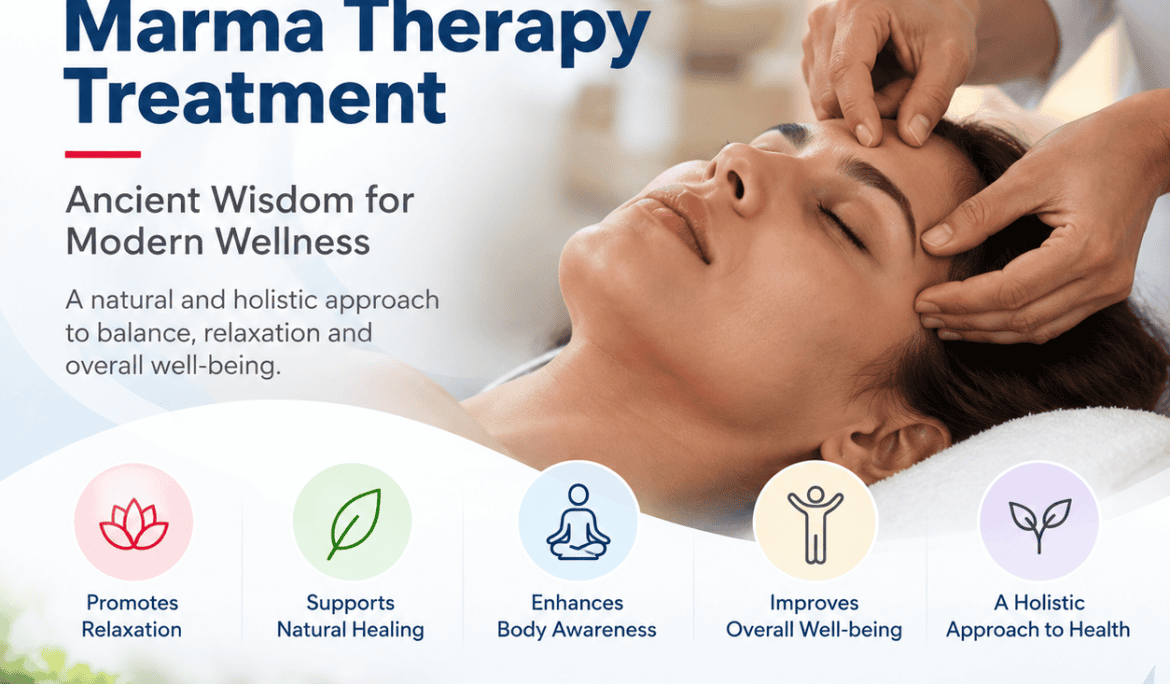
Marma Therapy Treatment is a traditional Ayurvedic approach that involves gentle attention to selected Marma points. Depending on the practitioner’s training and the purpose of a session, techniques may include controlled touch, gentle pressure, or stimulation.
The treatment is generally approached as a complementary wellness practice. It is important to distinguish traditional wellness practices from medical treatment. If you have persistent pain, an injury, or symptoms of an underlying condition, appropriate medical or physiotherapy assessment should not be delayed.
What Are Marma Points?
Marma points are specific locations described in traditional Ayurvedic literature. They are considered important areas within the traditional understanding of the body.
The location, characteristics, and significance of Marma points are discussed in Ayurvedic educational resources. The North Eastern Institute of Ayurveda & Homoeopathy, under the Ministry of AYUSH, includes Marma or vital points within its Ayurvedic study of human anatomy.
Because some Marma locations are traditionally considered particularly important, treatment should be performed carefully by someone with appropriate knowledge and training.
How Does Marma Therapy Treatment Work?
A Marma session may begin with a consultation to understand the person’s concerns, expectations, and relevant health information. The practitioner can explain the treatment approach before beginning.
During the session, selected Marma points may receive gentle pressure or stimulation. The technique, duration, and areas selected can differ from person to person.
A good treatment experience should be comfortable and respectful. Clients should be able to communicate with the practitioner throughout the session and report any discomfort.
Potential Benefits of Marma Therapy
People consider Marma Therapy Treatment for different wellness goals. However, claims about specific medical outcomes should be made carefully because evidence for individual traditional techniques can vary.
Potential areas that people may associate with Marma therapy include:
- Relaxation
- Mind-body awareness
- A calming therapeutic experience
- General wellness
- Greater awareness of physical sensations
- Support for a balanced wellness routine
Marma therapy should not be presented as a guaranteed cure for a medical condition. Its role is better understood within a broader approach to personal wellness and appropriate healthcare.
Common Marma Therapy Techniques
The techniques used can depend on the practitioner’s education, experience, and the individual’s needs.
Gentle Point Pressure
The practitioner may apply controlled pressure to selected points using the fingers or hands.
Circular Stimulation
Gentle circular movements may be used around selected areas according to the practitioner’s approach.
Mindful Touch
Some sessions may focus on slow and mindful touch to create a calm and relaxing experience.
Individualised Approach
The areas addressed during a session can vary. A professional consultation allows the practitioner to understand the individual’s requirements and comfort level.
Marma Therapy Treatment: Benefits at a Glance
| Aspect | What to Know |
|---|---|
| Traditional system | Ayurveda |
| Main focus | Selected Marma points |
| Common approach | Gentle touch or pressure |
| Primary wellness focus | Relaxation and body awareness |
| Treatment experience | Can vary between individuals |
| Professional consultation | Recommended before treatment |
| Medical replacement | Should not replace necessary medical care |
Marma Therapy and Hijama Cupping Treatment
Hijama Cupping Treatment is another traditional therapeutic approach, but it is different from Marma therapy.
According to a Ministry of AYUSH standard-treatment document for Unani medicine, Hijama is described as a form of cupping therapy that may involve cups with or without scarification. The same government resource distinguishes dry cupping from wet cupping.
Marma therapy focuses on selected Marma points using touch or pressure, while Hijama involves cupping techniques. Therefore, the two approaches should not be treated as interchangeable.
If you are considering Hijama Cupping Treatment, discuss your health history and treatment expectations with an appropriately trained practitioner before beginning.
Is Marma Therapy Safe?
Safety should always be considered before starting any hands-on therapy. The appropriate technique depends on the individual and the practitioner’s knowledge and training.
Before Marma Therapy Treatment, tell the practitioner about relevant health conditions, injuries, recent surgery, pregnancy, medications, or other circumstances that may affect treatment.
Particular caution is important around areas traditionally described as vital Marma locations. Government Ayurvedic resources also emphasise special care around certain Marma areas.
If you experience significant or unusual discomfort during treatment, tell the practitioner immediately.
Who Should Seek Professional Advice First?
Although people may explore Marma therapy for wellness, professional advice is particularly important if you have:
- A recent injury
- Severe or unexplained pain
- A recent operation
- A significant medical condition
- Pregnancy
- Skin injury or infection around the intended treatment area
- Any condition where physical pressure may be unsuitable
A complementary therapy should never delay assessment of potentially serious symptoms.
What to Expect During a Marma Therapy Session
Before Treatment
The practitioner may ask about your general health, concerns, previous treatment, and expectations. This is also an opportunity to ask questions about the technique and practitioner qualifications.
During Treatment
Selected Marma points may be gently stimulated using touch or pressure. The practitioner should explain what they are doing and maintain your comfort throughout the session.
After Treatment
People can have different experiences following hands-on therapies. Follow any aftercare advice provided by your practitioner and communicate any persistent or concerning symptoms.
How to Choose a Marma Therapy Provider
Choosing a suitable practitioner is an important part of the process. Before booking a session, consider the following:
Check Training and Experience
Ask about the practitioner’s relevant education, training, and experience with Marma therapy.
Understand the Treatment
A professional should clearly explain what the session involves and answer your questions before treatment.
Discuss Your Health History
Tell the practitioner about relevant medical conditions, injuries, medications, and other concerns.
Avoid Unrealistic Claims
Be cautious of providers who promise guaranteed cures or claim that one traditional therapy can treat every condition.
Frequently Asked Questions
What is Marma Therapy Treatment?
Marma Therapy Treatment is a traditional Ayurvedic practice focused on selected Marma points using techniques such as gentle touch or pressure.
What are the benefits of Marma Therapy?
People may explore Marma therapy for relaxation, body awareness, and general wellness. Specific health outcomes should not be guaranteed.
Is Marma Therapy the same as Hijama Cupping Treatment?
No. Hijama Cupping Treatment uses cupping techniques, while Marma therapy focuses on selected Marma points using touch or pressure. They are different traditional approaches.
Is Marma Therapy suitable for everyone?
Not necessarily. Individual health conditions, injuries, pregnancy, and other circumstances may affect suitability. Discuss your situation with an appropriately qualified professional.
How can I learn more about Ayurvedic research?
The AYUSH Research Portal, developed by the Ministry of AYUSH, provides a searchable resource for research information relating to traditional Indian systems of medicine, including Ayurveda and Unani.
Conclusion
Marma Therapy Treatment is a traditional Ayurvedic approach centred on selected Marma points and gentle stimulation. People may consider it as part of a broader wellness routine focused on relaxation and body awareness.
Before beginning treatment, it is important to understand the technique, consider your individual circumstances, and choose an appropriately trained provider. Marma therapy should complement—not replace—necessary medical assessment and evidence-based healthcare.